Free Missing Numbers Worksheets
Fill in the missing numbers in a counting sequence. Kindergarteners work with numbers to 20; first graders extend the pattern all the way to 100.
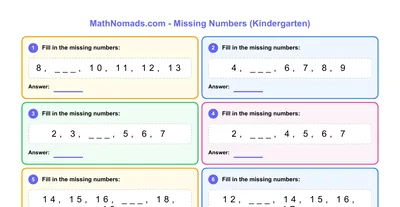
Missing Numbers (1-20)
Kindergarten
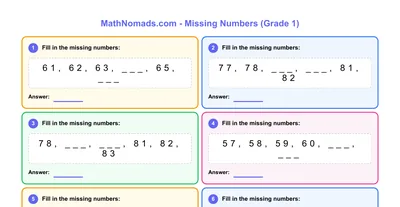
Missing Numbers (to 100)
Grade 1
About these missing numbers worksheets
Missing-number worksheets show a short counting sequence with one or two numbers blanked out — for example "6, 7, ___, 9, 10." Filling the gap requires more than reciting: children must know what comes after and before a number, which builds true number-line understanding.
The kindergarten level uses sequences within 1–20 with a single missing number. The grade 1 level uses sequences anywhere in 1–100 with two missing numbers, reinforcing patterns across decade boundaries (for example 58, 59, 60, 61) where children most often stumble.
Frequently Asked Questions
What skills do missing number worksheets teach?
They teach number order, counting on from any number (not just 1), and before/after/between relationships. These are core kindergarten and grade 1 standards and a foundation for addition and subtraction.
Which level should my child start with?
If your child can count aloud to 20 confidently, start with the kindergarten sheet (numbers 1–20, one blank). Move to the grade 1 sheet (numbers to 100, two blanks) once sequences within 20 are easy.
Can I print more than one worksheet?
Yes — every click generates a brand-new random worksheet, so you can print as many unique missing-number worksheets as you like, free.