Free Ten Frames Worksheets
Count the dots shown in ten frames — the classic 2×5 grids used in kindergarten classrooms to build number sense up to 10 and 20.
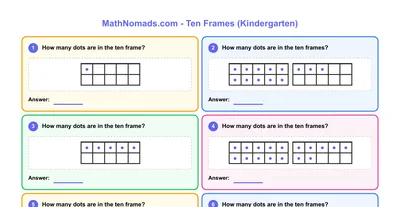
Ten Frames (Count to 20)
Kindergarten
About these ten frames worksheets
A ten frame is a simple 2-by-5 grid that holds up to ten dots. It is one of the most effective tools for early number sense because children begin to see numbers as groups — "8 is a full row of 5 plus 3 more" — instead of counting one dot at a time. Ten frames also lay the groundwork for addition strategies like making ten.
These worksheets mix single ten frames (numbers 1–10) with double ten frames (numbers 11–20), matching how kindergarten curricula introduce teen numbers as "ten and some more." Each sheet is randomly generated, so your child sees new dot patterns on every download.
Frequently Asked Questions
What is a ten frame?
A ten frame is a rectangular grid with 2 rows of 5 squares. Dots are placed in the squares to represent numbers up to 10. Two ten frames together show numbers 11–20. Ten frames help children subitize — recognize quantities at a glance — and understand place value.
What grade uses ten frame worksheets?
Ten frames are used mainly in kindergarten and early first grade. They support counting to 20, comparing numbers, and beginning addition and subtraction within 10.